Official Heinen Delfts Blauw webshop. Read more
Ordered on workdays before 3:00 PM, shipped today
Our stores
Heinen Delfts Blauw
Login
Favorites

Delft blue of the
highest quality

Producing Delft blue pottery of the highest quality requires precision, expertise and years of experience. At Heinen Delfts Blauw, we therefore prefer to keep the entire process in our own hands. From selecting the raw materials for our clay and paint to firing the finished, hand-painted piece, we manage the entire production process in-house. At every stage, we honour the centuries-old traditions of this remarkable craft while continuously striving to improve the quality of our products.

View the process
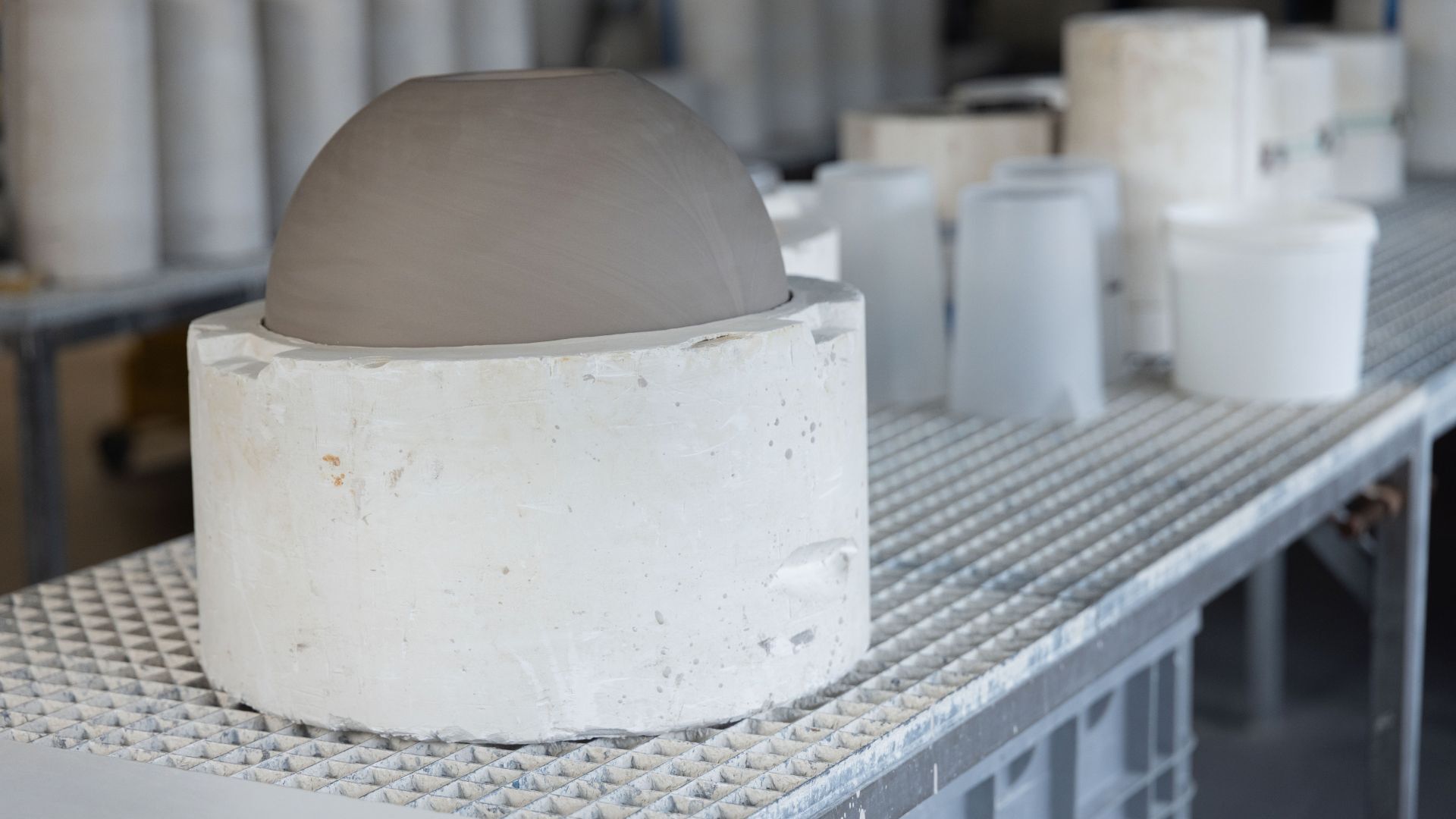
Plaster casting mould (master model) for Delft blue
01

Moulds

Every Delft blue piece begins with a design. Once the design has been developed, a matching mould is created. These casting moulds are made from plaster and start with what is known as a master model: a solid form that serves as the basis for creating a hollow casting mould.
Raw materials for the clay: quartz, kaolin and chalk
02

Clay

Everything begins with selecting the right raw materials and carefully composing the clay. Our hand-painted pottery is made from earthenware, also known as faience. The liquid clay is composed of more than ten different raw materials, which are carefully mixed in the correct proportions.

Liquid clay being poured into the plaster mould
03

Casting

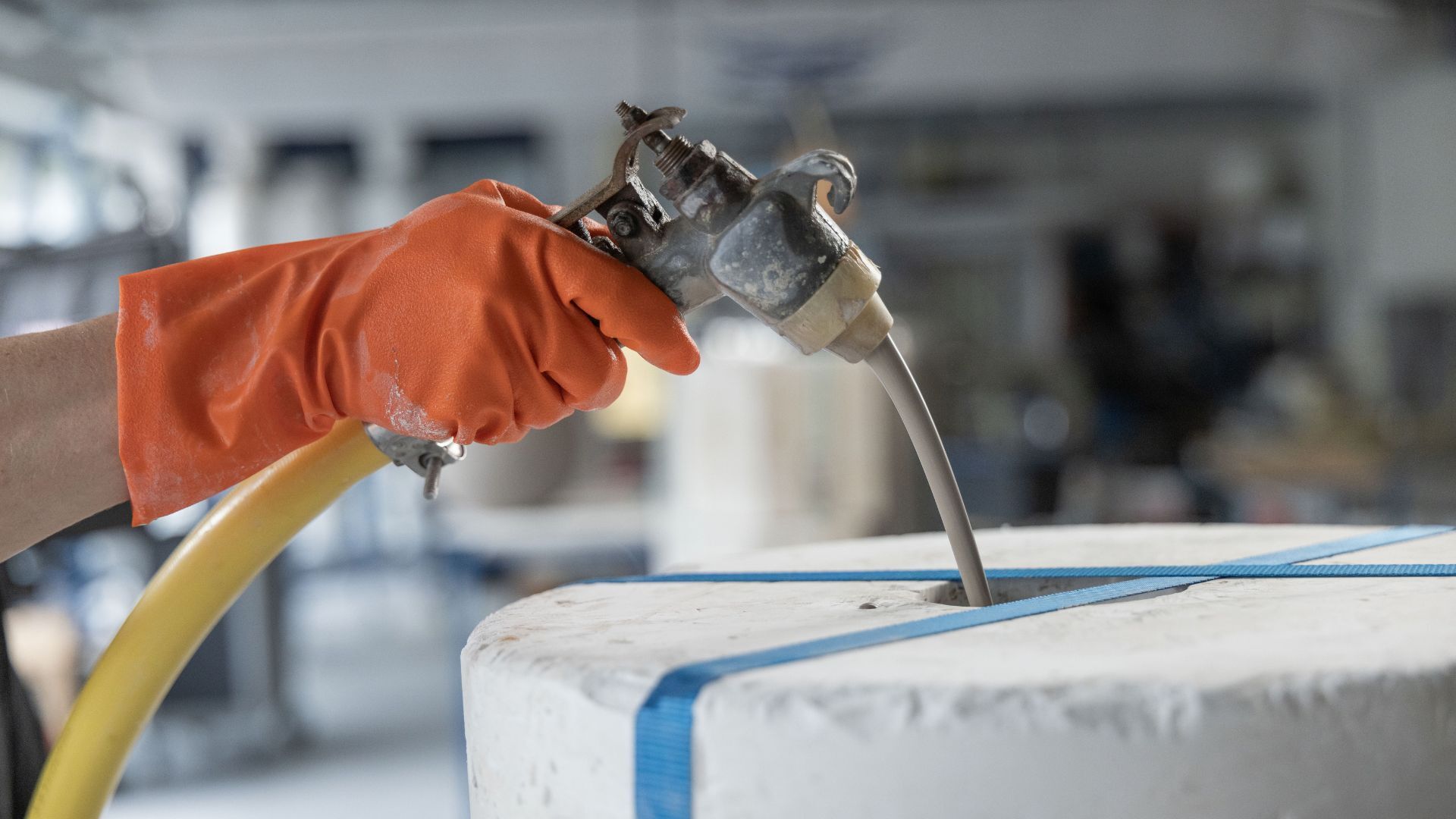
The liquid clay is poured into plaster moulds. Plaster is porous and absorbs water from the clay. As a result, the clay against the walls of the mould dries faster, forming a layer of clay. The clay in the centre of the mould remains liquid for longer and is poured out after a certain amount of time. This is how, for example, a hollow vase is created. The longer the clay remains in the mould, the thicker the walls of the finished piece will be.

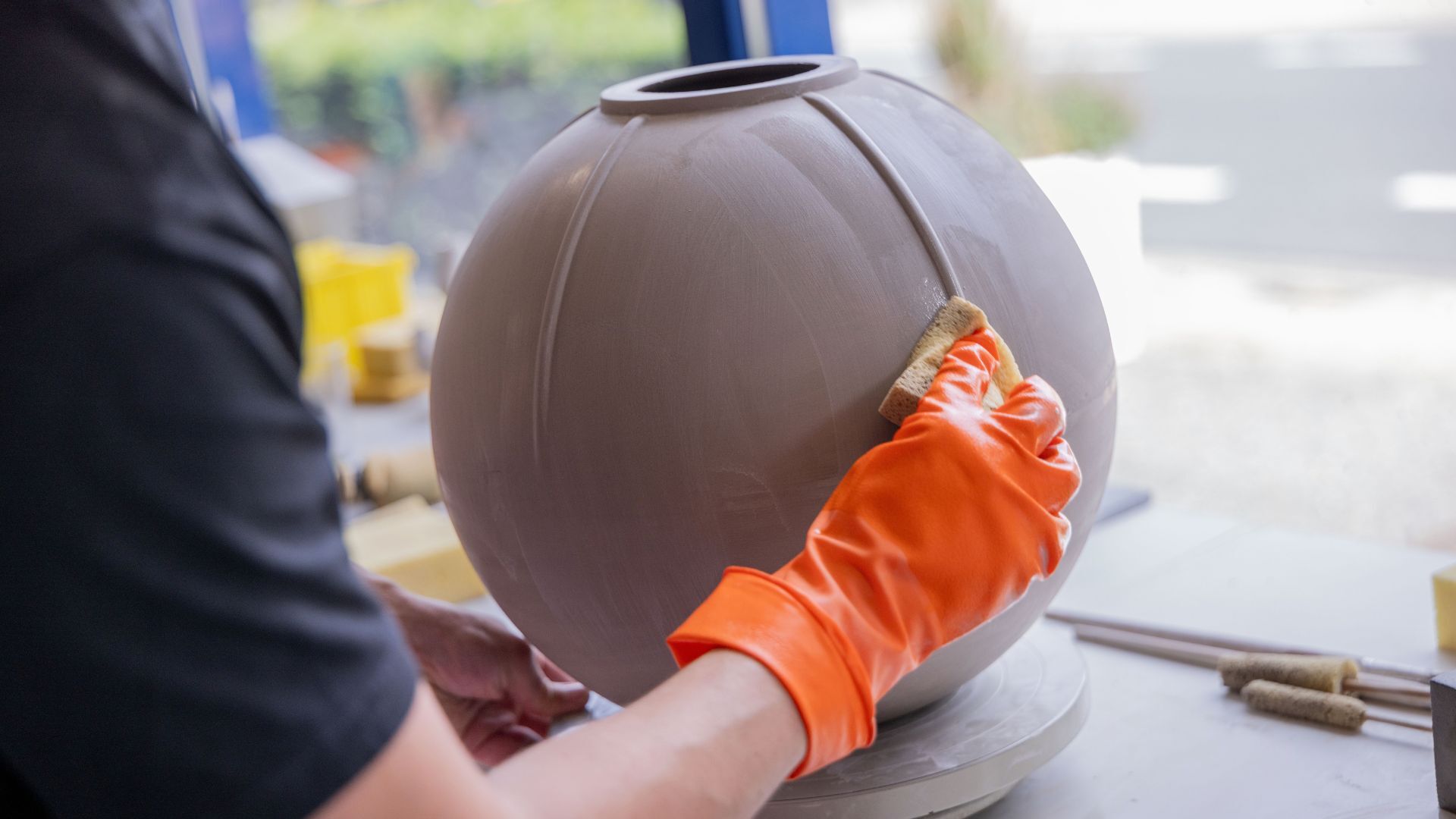
Piece being trimmed and sponged
04

Refining

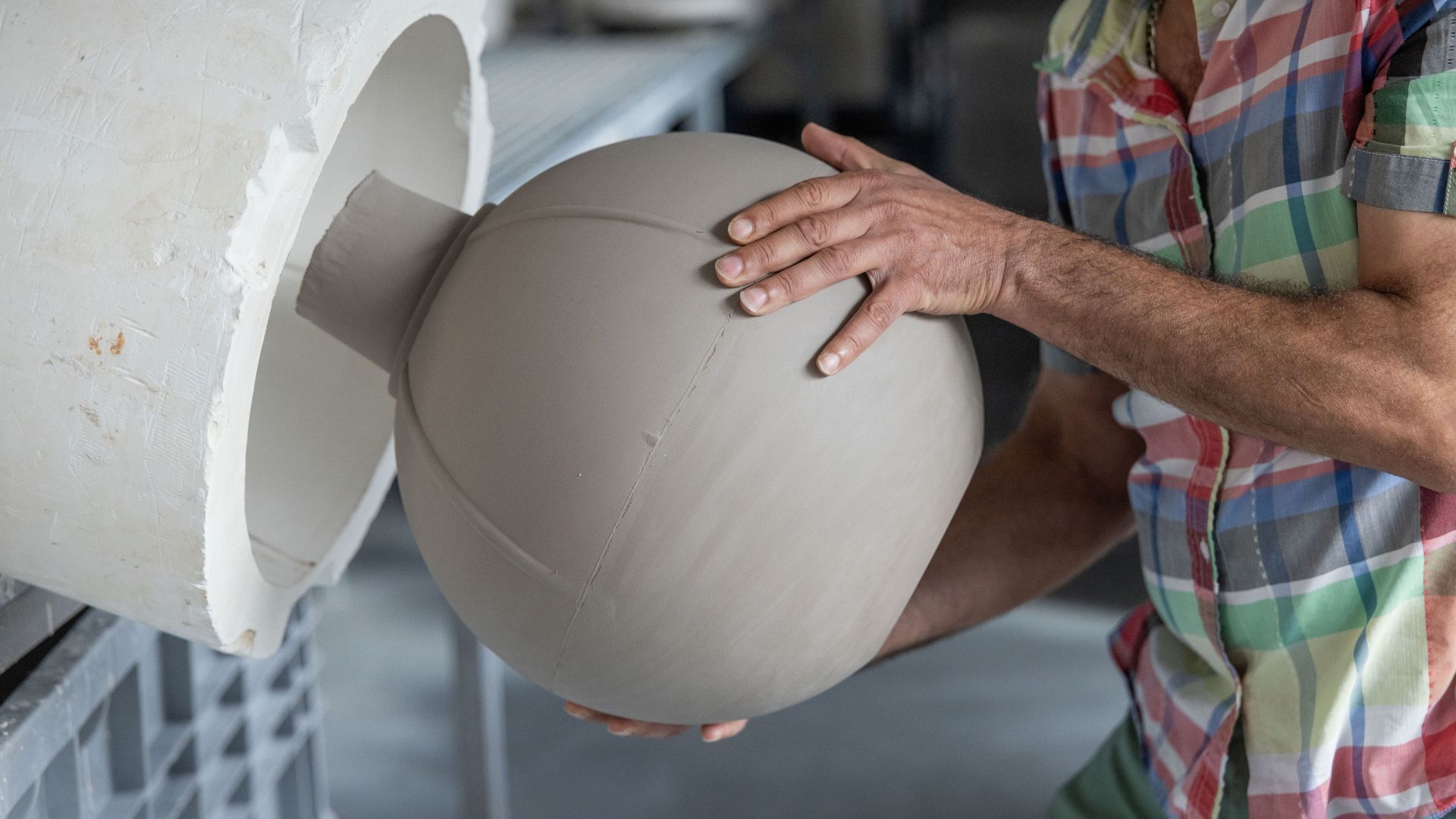
Once the clay has dried sufficiently, the piece is removed from the mould. Small imperfections are often still visible around the casting edges. These are carefully trimmed away with a small knife. The surface is then smoothed using a sponge and a little water. This gives the piece its final shape and a smooth surface ready for the next stage.

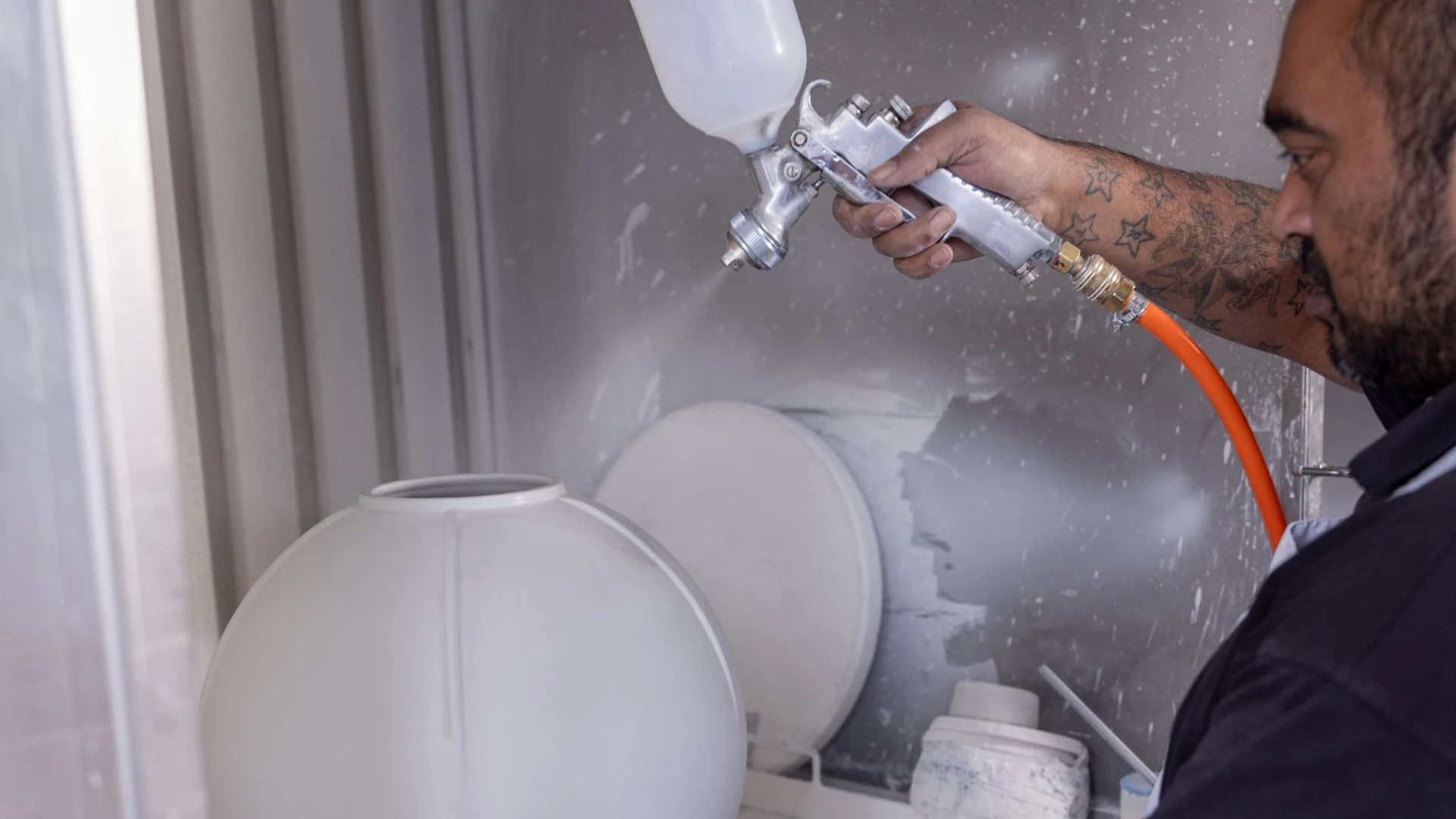
Applying the engobe layer
05

Engobe

Painting directly onto dried clay is difficult because the surface is too porous. That is why a layer of engobe is applied: a thin layer of clay with controlled water absorption. This layer allows the paint to flow smoothly during painting and ensures that the different shades of blue will come into their own beautifully.

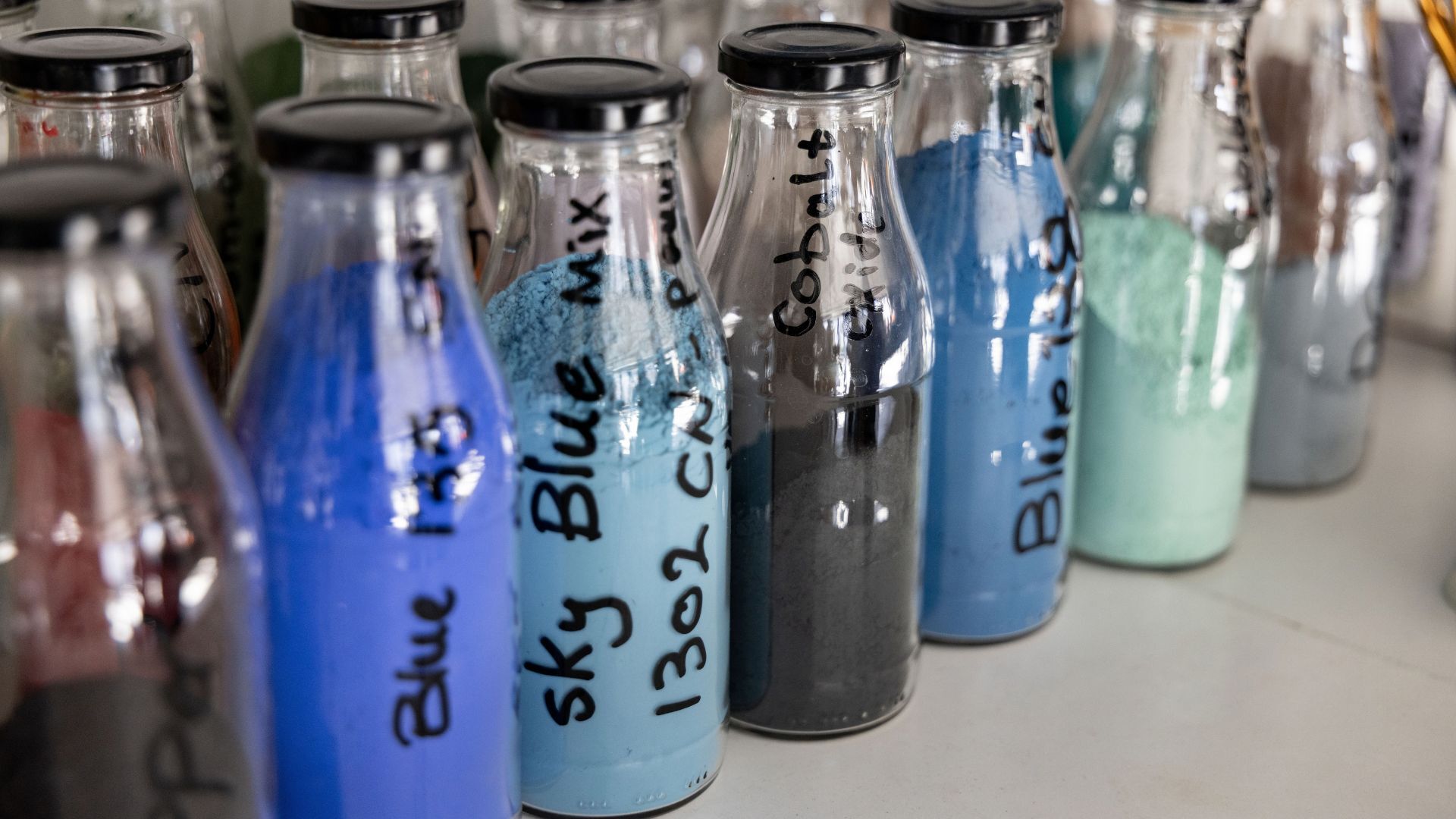
Grinding the paint with porcelain balls
06

Paint

The characteristic Delft blue colour begins with a grey paint containing cobalt oxide. This paint is also produced in our own atelier. Making the paint is a carefully controlled process that takes approximately eight days. All the raw materials are added to a rotating barrel containing porcelain balls, which grind the ingredients and carefully blend them together. At this stage, the paint is still black.

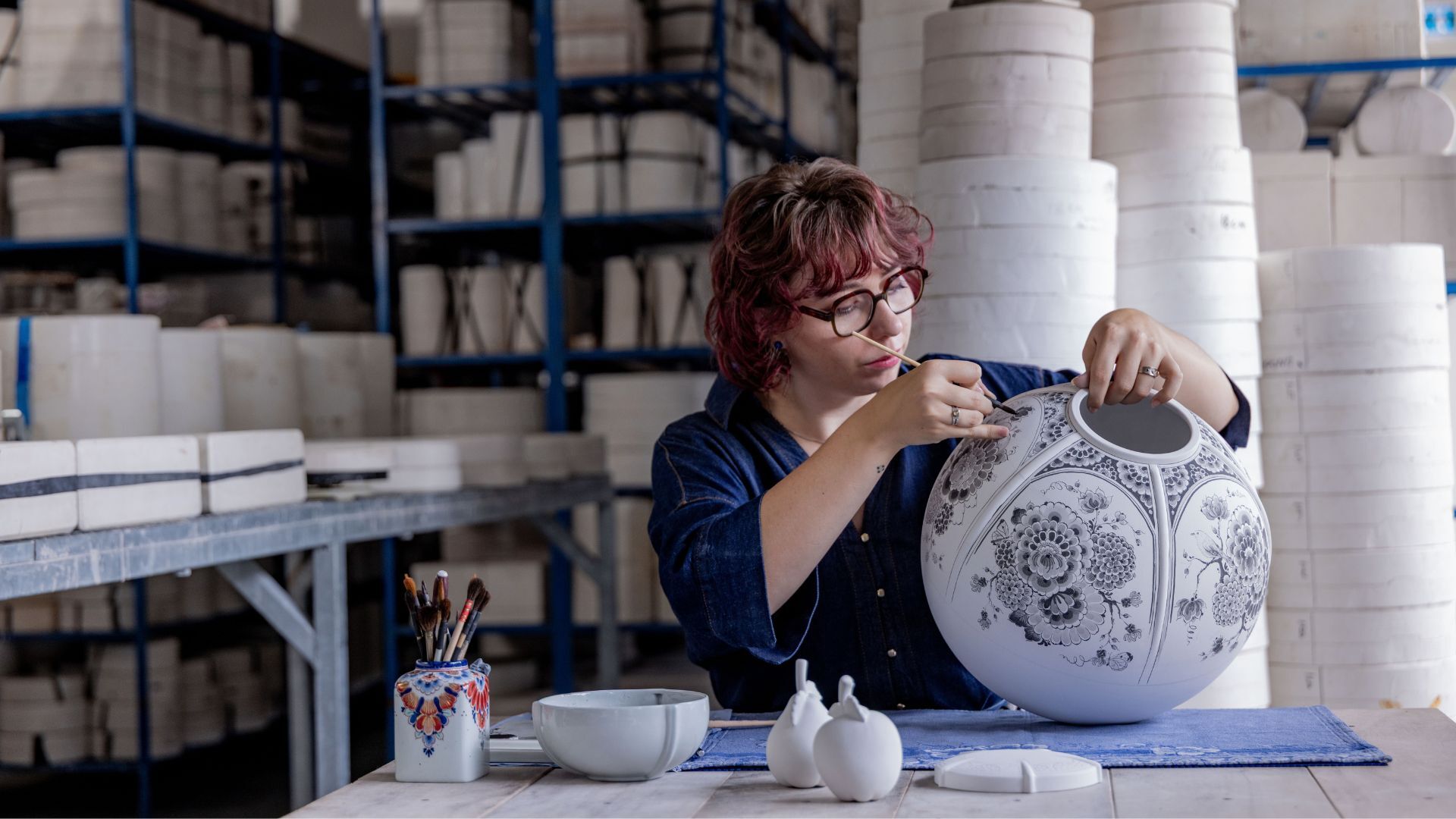
Plateel painter at work (brush detail)
07

Painting

The piece and the paint are ready. Now our plateel painters can begin their work. The knowledge and techniques of Delft blue painting have been passed down for centuries, from master painter to apprentice.

Delft blue is built up using different shades of blue. The final shade is determined by mixing the paint with the right amount of water. By using different concentrations, the painters create depth and contrast within the decoration. Precision is essential: every brushstroke remains visible after firing and cannot be altered afterwards.

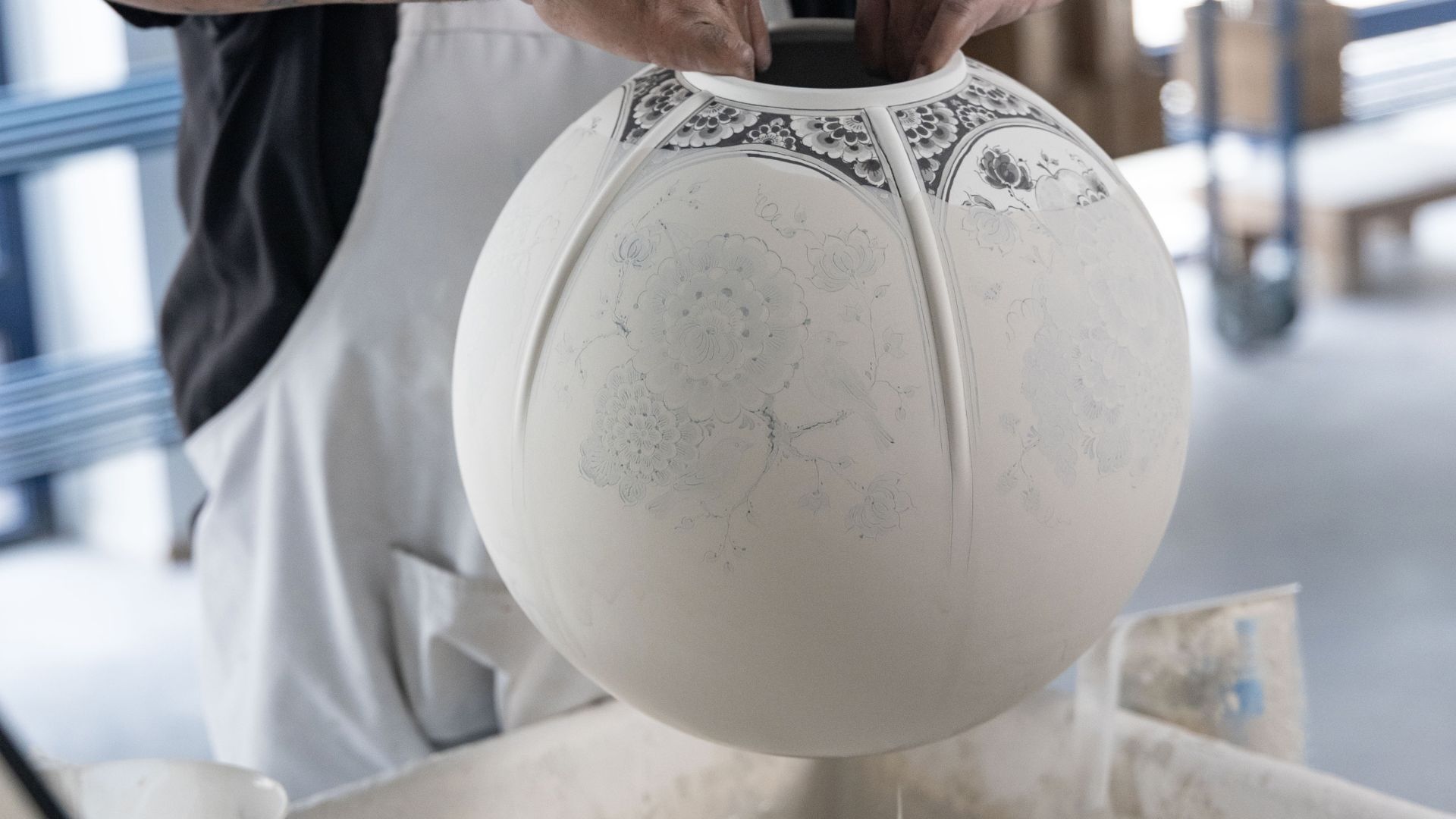
Piece being glazed by hand
08

Glazing

After painting, the piece is covered with a layer of glaze. The glaze is also carefully formulated in our own atelier to achieve the desired colour, gloss and finish.

The piece is glazed by hand, ensuring that the glaze is distributed evenly across the surface. At this stage, the painted decoration is barely visible. The paint is completely covered by the glaze and the piece is ready to go into the kiln once again.

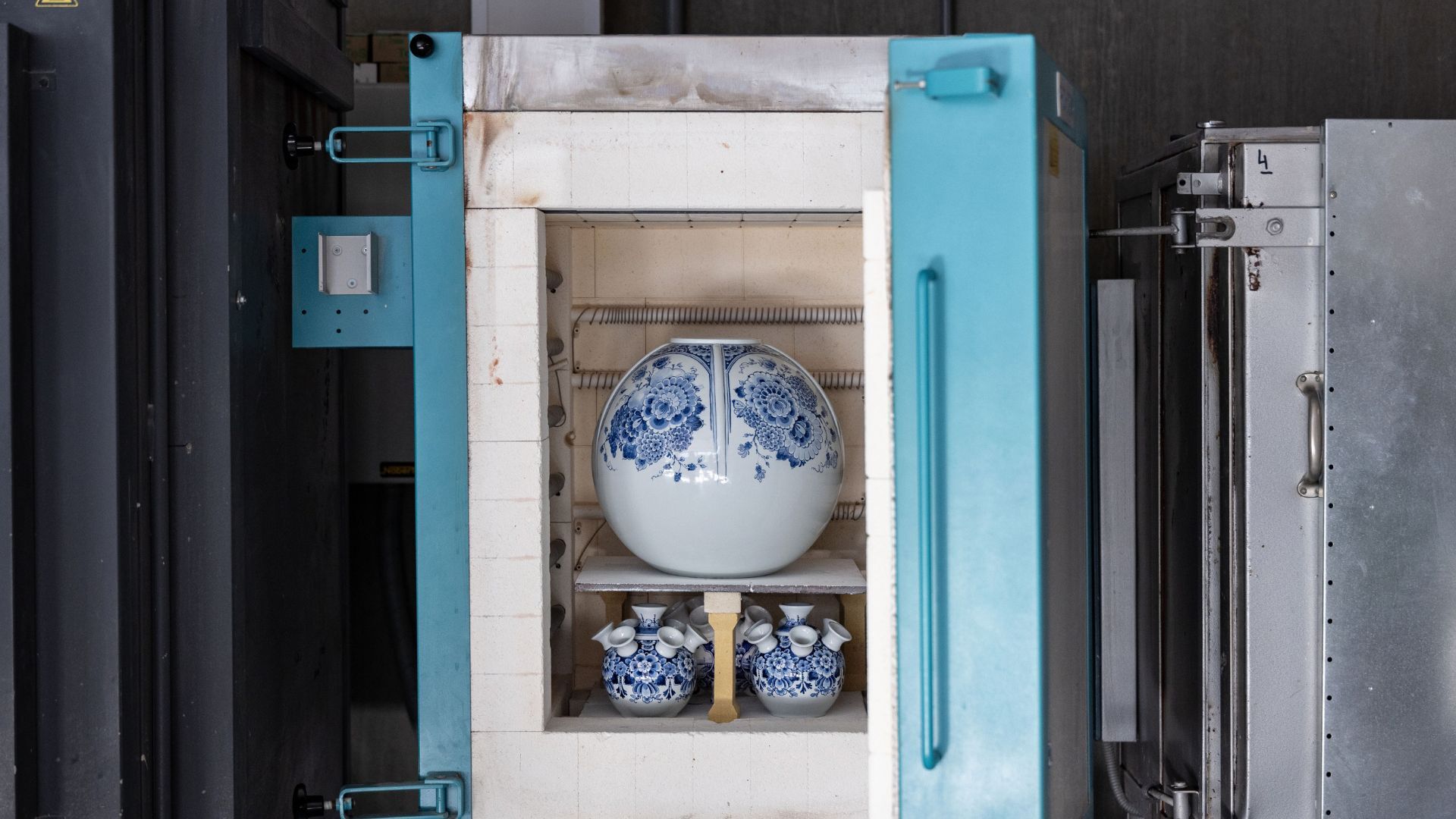
The kiln during firing at 1040°C
09

Firing

The kiln is heated to approximately 1040°C. Under this extreme heat, a chemical reaction takes place between the glaze and the paint. The glaze melts and becomes transparent, while the black paint transforms into the iconic Delft blue colour.

Without this chemical reaction, the characteristic colour transformation would not take place. Instead of blue, the paint would emerge from the kiln green.

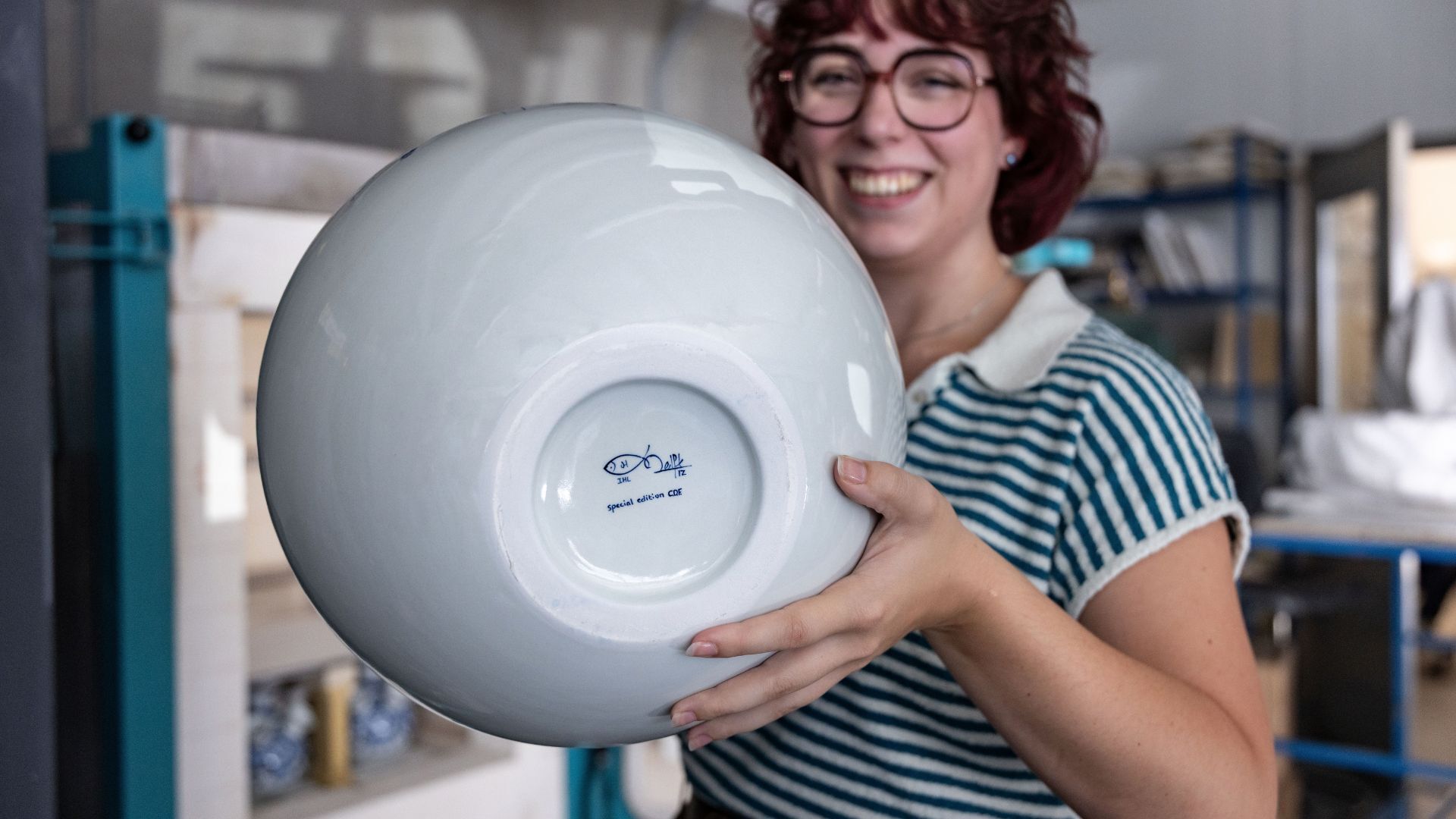
The fish trademark and the painter's signature
10

Quality control

Once the piece comes out of the kiln, it is thoroughly inspected to ensure that it meets Heinen Delfts Blauw’s quality standards. Our hand-painted pieces always carry the characteristic fish trademark, together with the signature of the plateel painter.

Every hand-painted finished piece also comes with its own certificate of authenticity. This not only guarantees its quality, but also confirms its origins as authentic, handmade Delft blue pottery.

The hands behind this craft

Behind every step are our plateel painters. Meet the makers of your Delft blue.

Meet our painters